
The main steps of ore fire assaying
The fire assay method is a classic analytical technique used to determine the content of precious metals (primarily gold and silver) in materials such as minerals and metals through high-temperature melting and cupellation.
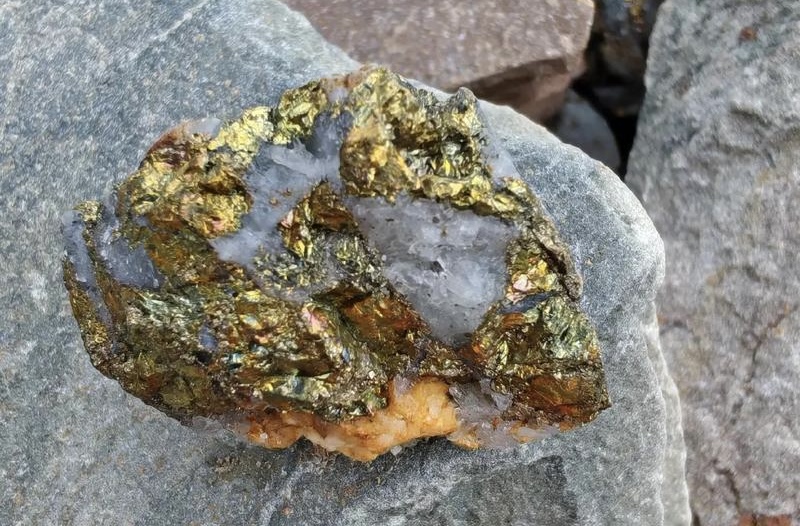
The fire assay is a classic analytical method for determining the content of precious metals (mainly gold and silver) in minerals, metals and other materials by high-temperature melting and ash blowing .
The principle of fire assay is based on the chemical inertness and high density of precious metals. At high temperatures, the added precipitant (such as lead oxide) melts and traps trace amounts of precious metals in the sample, forming lead clasps that sink to the bottom and separate from the slag. Subsequently, through steps such as ash blowing , the precious metals are purified and quantified.
Main steps:
① Sampling : Samples include minerals, refined products, debris, etc., requiring careful collection of representative samples. Since precious metals often exist in a random dispersion state in minerals, a large amount of minerals is often needed to obtain a representative sample, which must then be carefully crushed.
② Sample melting : A suitable flux, such as crushed sodium carbonate, borax, silicates, or lead monoxide, is added to the sample. The mixture is then heated to melt the sample and flux. Lead monoxide is reduced to metallic lead, which, along with other precious metals, sinks to the bottom of the container. Upon cooling, it forms small metallic spheres containing precious metals, a large amount of metallic lead, and other metallic impurities. The resulting slag is discarded.
③ The cauldron assay involves placing small metal spheres containing precious metals and lead in a cauldron made from bone ash (or unglazed porcelain). The cauldron is then heated in a specially designed furnace that provides a strong oxidizing atmosphere. During this process, the lead and other metallic impurities in the spheres are oxidized, forming lead oxide and other metal oxides that become slag or seep into the pores of the cauldron. Only the gold and silver remain unoxidized, retaining their metallic state and separating from the lead and other metal oxides. The cauldron is then removed from the furnace and allowed to cool slowly. The resulting spheres, after being washed and dried, can be used as test samples. Alternatively, the spheres can be hammered or rolled into thin sheet-like samples.
④ Weighing: Weigh the sample containing gold and silver to determine the total weight of gold and silver.
⑤ Gold and silver separation: Treat the sample containing gold and silver with hot dilute nitric acid to dissolve the silver. ⑥ Weighing: After removing the silver, wash and dry the sample containing only gold, then weigh it to determine the weight of the gold.
⑥ Other precautions: Other precious metals in the sample, such as platinum, palladium, rhodium, iridium, osmium, and ruthenium, undergo the following changes in the fire assay: Platinum, palladium, and rhodium dissolve in molten lead. When the sample is heated in a baking dish, they are not oxidized but remain in the metal spheres along with gold and silver. When hot dilute nitric acid is added to dissolve silver, only palladium dissolves; platinum and rhodium remain in the gold, increasing its weight. If iridium is present, it will oxidize in the baking dish, forming a black deposit that adheres to the surface of the metal spheres. When the metal spheres are heated in the baking dish, osmium and ruthenium form volatile oxides (osmium oxide has a boiling point of 130°C; ruthenium oxide has a boiling point of 100°C) and are lost. For these reasons, the fire assay cannot be used to analyze platinum group elements in a sample; other chemical analysis methods must be used instead.
The fire assay requires extremely high purity lead oxide, primarily due to strict control over precious metal (gold, silver) impurities. There are also clear limits for other base metal impurities that may affect the accuracy of the results. Shanghai Canal provides lead oxide specifically for fire assays, with strictly controlled gold and silver content : silver <0.5 ppm, gold <0.05 ppm.
|
Item |
Standard / Specification |
Test Result |
Remarks |
|
Lead Monoxide (PbO) / % ≥ |
99.3 |
99.60 |
|
|
Lead (Pb) / % ≤ |
0.1 |
0.022 |
|
|
Lead Peroxide % ≤ |
0.05 |
0.009 |
|
|
Nitric Acid Insoluble Matter % ≤ |
0.1 |
0.022 |
|
|
Moisture Content % ≤ |
0.2 |
0.021 |
|
|
Ferric Oxide (Fe2O3 ) % ≤ |
0.005 |
0.00060 |
|
|
Cupric Oxide (CuO) % ≤ |
0.002 |
0.00020 |
|
|
Sieve Residue (180 mesh) % ≤ |
0.2 |
0.16 |
|
|
Silver (Ag) % ≤ |
0.00005 |
0.000020 |
|
|
Gold (Au) % ≤ |
0.000005 |
— |
For more details, please visit the official website: https://www.canalchem.com/products/prd-category-004/product-021.html