
Application of acrylic resins in MLCCs
Acrylic resin is used in multiple stages of the production and structure of MLCCs (multilayer ceramic capacitors). It is mainly used as a binder, slurry thickener, and electrode resin layer component. Utilizing its excellent designability, good thermal decomposition and environmental protection properties, it helps MLCCs achieve high performance, high reliability, and environmentally friendly production.
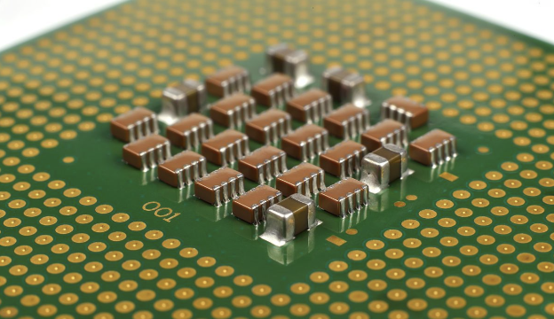
Acrylic resin is used in multiple production stages and structures of MLCCs (Multilayer Ceramic Capacitors). It primarily functions as a binder, slurry thickener, and electrode resin layer component. Leveraging its excellent designability, good thermal decomposition properties, and environmental friendliness, it helps achieve high-performance, high-reliability, and environmentally friendly production of MLCCs.
1. As a Binder for Ceramic Green Sheets
This is one of the most crucial applications of acrylic resin in MLCC manufacturing. Its key role is to bind ceramic powder into shape and ensure its clean decomposition in subsequent processes.
• Core Function: In the tape casting process of MLCCs, acrylic resin acts as a binder, mixing ceramic powder (such as barium titanate), solvents, dispersants, etc., into a uniform slurry. This slurry is coated onto a base film and, after drying, forms a high-strength ceramic green sheet. These green sheets are the "building blocks" that constitute the multilayer structure inside the MLCC, and their quality directly determines the performance of the final product.
• Performance Advantages:
o Excellent thermal decomposition (clean decomposition): This is the most critical performance characteristic. In the subsequent debinding and sintering process, the adhesive must be completely decomposed into gaseous vapors at high temperatures, leaving no carbon residue, otherwise it will affect the insulation resistance and other electrical properties of the MLCC. Acrylic resins perform excellently in this regard. For example, Mitsubishi Corporation's acrylic products can be completely decomposed in nitrogen or air atmospheres below 500℃, and some models can even be completely decomposed at 350℃.
* Excellent film-forming and mechanical properties: Through molecular design, acrylic resins can be used to produce high-strength, high-flexibility green sheets even at low addition levels.
* Dual function (adhesive + dispersion): Acrylic acid and its copolymers are also good dispersants and have a certain degree of thixotropy, which can simplify paste formulation.
2. Used in Electronic PasteElectronic paste is a key material for manufacturing the internal and external electrodes of MLCCs. Acrylic resin mainly plays the role of a thickener here and is a core component of the organic carrier.
* Core role: Electronic paste is composed of conductive metal powders (such as nickel and copper), glass powder, and an organic carrier. The organic carrier is responsible for uniformly dispersing the solid powder and imparting suitable rheological properties (such as viscosity and thixotropy) to the slurry for precise printing or coating. Polyacrylate resin is a commonly used thickener.
• Key Performance Requirements:
o Carbon Residue: The organic carrier must also be completely removed during sintering. Any residual carbon will severely reduce the conductivity of the electrode, leading to product failure. Therefore, the core design principle of acrylic resin thickeners is to achieve low-residue thermal decomposition.
o Stringability: An ideal slurry needs appropriate stringability to ensure the continuity and integrity of the lines. Excessive stringability will cause the slurry to form a "spider web," leading to short circuits between lines; insufficient stringability will easily cause line breakage, resulting in open circuits.
o Strength: During the high-temperature sintering process to remove organic matter, if the resin decomposes too quickly or the film strength is insufficient, defects such as cracks and collapse may occur in the electrode layer.
3. Conductive Resin Layer for External ElectrodesThis is a relatively new application direction for acrylic resins. To improve the flexural strength and reliability of MLCCs, the external electrode is designed with a double-layer structure: an inner metal electrode layer and an outer conductive resin layer. The formulation of this conductive resin layer includes conductive metal, epoxy resin, and acrylic resin. The addition of acrylic resin helps improve the flexibility of the resin layer and its adhesion to the metal layer.
4. Used in Release Film
In the MLCC casting process, the ceramic preform is formed on a release film. Patented technologies use silicone-modified acrylic resin as one of the components of the release film coating. This modified acrylic resin helps improve the surface smoothness and wettability of the release film, with performance comparable to imported products, but at a lower cost.
However, acrylic resins come in both thermoplastic and thermosetting types. How should one choose?
Acrylic resins are both thermoplastic and thermosetting, depending on their molecular structure and synthesis method. Simply put, the fundamental difference between the two lies in whether an irreversible chemical cross-linking reaction can occur through heating.
A. Thermoplastic Acrylic Resin
• Structural Characteristics: Linear molecular structure; no chemical cross-linking between polymer chains.
• Core Characteristic: Reversible physical change. Softens upon heating and solidifies upon cooling, repeating this process multiple times. In MLCC applications, it is primarily utilized for its excellent thermal decomposition properties, completely decomposing and volatilizing during sintering without residue.
• Applications in MLCCs: Primarily used as a binder for ceramic green bodies and a thickener/organic carrier for electronic pastes.
• Thermoplastic acrylic resins are chosen for applications requiring temporary molding followed by complete removal (e.g., binders, thickeners).
B. Thermosetting Acrylic Resin
• Structural Characteristics: The molecular chain contains reactive functional groups (e.g., hydroxyl, carboxyl groups). Under heating or specific conditions, these functional groups chemically react with curing agents (e.g., amino resins, epoxy resins).
• Core Characteristic: Irreversible chemical change. After the reaction, a three-dimensional network structure is formed, becoming insoluble and infusible. Once solidified, it cannot be softened again by heating.
• Applications in MLCCs: Primarily used as the conductive resin layer for external electrodes. This resin layer needs to form a robust, heat-resistant network structure to absorb stress, improve flexural strength, and resist subsequent electroplating processes.
• In applications requiring long-term, permanent structural support and protection (such as external electrode layers), thermosetting acrylic resins are selected.
Shanghai Canal provides acrylic resins from Mitsubishi Japan, which can be used in sintered ceramic products such as MLCCs as binders and thickeners. It exhibits good thermal decomposition properties and controllable fiber drawing.
https://www.canalchem.com/products/prd-category-004/product-060.html
1. As a Binder for Ceramic Green Sheets
This is one of the most crucial applications of acrylic resin in MLCC manufacturing. Its key role is to bind ceramic powder into shape and ensure its clean decomposition in subsequent processes.
• Core Function: In the tape casting process of MLCCs, acrylic resin acts as a binder, mixing ceramic powder (such as barium titanate), solvents, dispersants, etc., into a uniform slurry. This slurry is coated onto a base film and, after drying, forms a high-strength ceramic green sheet. These green sheets are the "building blocks" that constitute the multilayer structure inside the MLCC, and their quality directly determines the performance of the final product.
• Performance Advantages:
o Excellent thermal decomposition (clean decomposition): This is the most critical performance characteristic. In the subsequent debinding and sintering process, the adhesive must be completely decomposed into gaseous vapors at high temperatures, leaving no carbon residue, otherwise it will affect the insulation resistance and other electrical properties of the MLCC. Acrylic resins perform excellently in this regard. For example, Mitsubishi Corporation's acrylic products can be completely decomposed in nitrogen or air atmospheres below 500℃, and some models can even be completely decomposed at 350℃.
* Excellent film-forming and mechanical properties: Through molecular design, acrylic resins can be used to produce high-strength, high-flexibility green sheets even at low addition levels.
* Dual function (adhesive + dispersion): Acrylic acid and its copolymers are also good dispersants and have a certain degree of thixotropy, which can simplify paste formulation.
2. Used in Electronic PasteElectronic paste is a key material for manufacturing the internal and external electrodes of MLCCs. Acrylic resin mainly plays the role of a thickener here and is a core component of the organic carrier.
* Core role: Electronic paste is composed of conductive metal powders (such as nickel and copper), glass powder, and an organic carrier. The organic carrier is responsible for uniformly dispersing the solid powder and imparting suitable rheological properties (such as viscosity and thixotropy) to the slurry for precise printing or coating. Polyacrylate resin is a commonly used thickener.
• Key Performance Requirements:
o Carbon Residue: The organic carrier must also be completely removed during sintering. Any residual carbon will severely reduce the conductivity of the electrode, leading to product failure. Therefore, the core design principle of acrylic resin thickeners is to achieve low-residue thermal decomposition.
o Stringability: An ideal slurry needs appropriate stringability to ensure the continuity and integrity of the lines. Excessive stringability will cause the slurry to form a "spider web," leading to short circuits between lines; insufficient stringability will easily cause line breakage, resulting in open circuits.
o Strength: During the high-temperature sintering process to remove organic matter, if the resin decomposes too quickly or the film strength is insufficient, defects such as cracks and collapse may occur in the electrode layer.
3. Conductive Resin Layer for External ElectrodesThis is a relatively new application direction for acrylic resins. To improve the flexural strength and reliability of MLCCs, the external electrode is designed with a double-layer structure: an inner metal electrode layer and an outer conductive resin layer. The formulation of this conductive resin layer includes conductive metal, epoxy resin, and acrylic resin. The addition of acrylic resin helps improve the flexibility of the resin layer and its adhesion to the metal layer.
4. Used in Release Film
In the MLCC casting process, the ceramic preform is formed on a release film. Patented technologies use silicone-modified acrylic resin as one of the components of the release film coating. This modified acrylic resin helps improve the surface smoothness and wettability of the release film, with performance comparable to imported products, but at a lower cost.
However, acrylic resins come in both thermoplastic and thermosetting types. How should one choose?
Acrylic resins are both thermoplastic and thermosetting, depending on their molecular structure and synthesis method. Simply put, the fundamental difference between the two lies in whether an irreversible chemical cross-linking reaction can occur through heating.
A. Thermoplastic Acrylic Resin
• Structural Characteristics: Linear molecular structure; no chemical cross-linking between polymer chains.
• Core Characteristic: Reversible physical change. Softens upon heating and solidifies upon cooling, repeating this process multiple times. In MLCC applications, it is primarily utilized for its excellent thermal decomposition properties, completely decomposing and volatilizing during sintering without residue.
• Applications in MLCCs: Primarily used as a binder for ceramic green bodies and a thickener/organic carrier for electronic pastes.
• Thermoplastic acrylic resins are chosen for applications requiring temporary molding followed by complete removal (e.g., binders, thickeners).
B. Thermosetting Acrylic Resin
• Structural Characteristics: The molecular chain contains reactive functional groups (e.g., hydroxyl, carboxyl groups). Under heating or specific conditions, these functional groups chemically react with curing agents (e.g., amino resins, epoxy resins).
• Core Characteristic: Irreversible chemical change. After the reaction, a three-dimensional network structure is formed, becoming insoluble and infusible. Once solidified, it cannot be softened again by heating.
• Applications in MLCCs: Primarily used as the conductive resin layer for external electrodes. This resin layer needs to form a robust, heat-resistant network structure to absorb stress, improve flexural strength, and resist subsequent electroplating processes.
• In applications requiring long-term, permanent structural support and protection (such as external electrode layers), thermosetting acrylic resins are selected.
Shanghai Canal provides acrylic resins from Mitsubishi Japan, which can be used in sintered ceramic products such as MLCCs as binders and thickeners. It exhibits good thermal decomposition properties and controllable fiber drawing.
https://www.canalchem.com/products/prd-category-004/product-060.html