
Introduction to light curing 3D printing technology
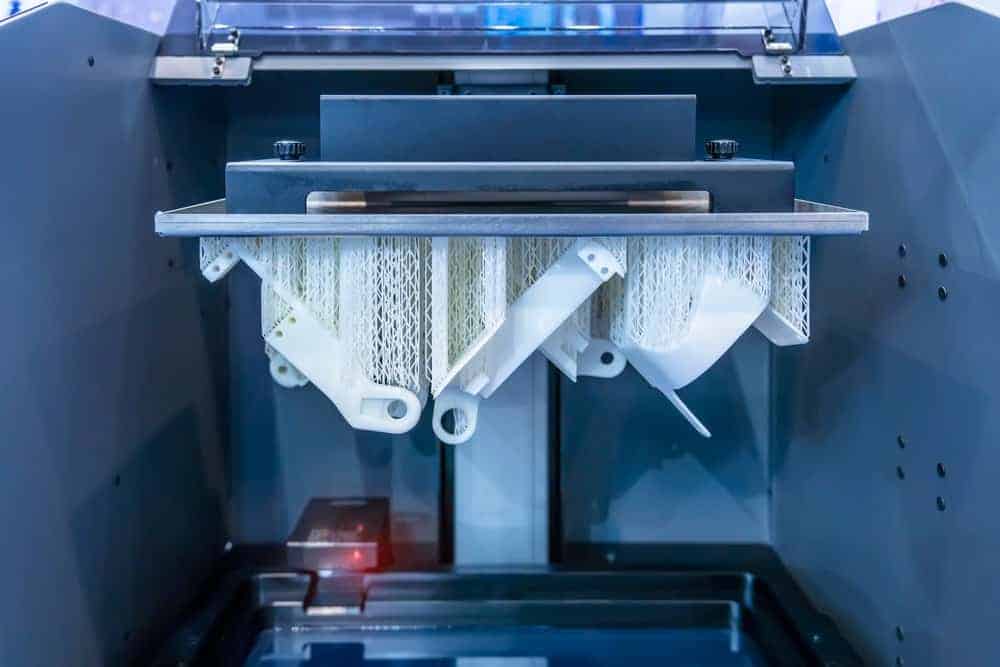
Stereolithography (Vat Photopolymerization) is an additive manufacturing technology that utilizes specific wavelength ultraviolet light to irradiate liquid photosensitive resin, causing it to undergo polymerization and solidify layer by layer. Stereolithography is one of the earliest emerging, most mature, and most widely used technology routes among all 3D printing technologies. Due to its high molding accuracy and excellent surface quality, it occupies an important position in fields such as dentistry, jewelry, medical care, and product prototype development.
I. Overview of Photopolymer 3D Printing
Vat photopolymerization (VAT) is an additive manufacturing technology that uses ultraviolet light of a specific wavelength to irradiate liquid photosensitive resin, causing it to polymerize and solidify layer by layer. Vat photopolymerization is one of the earliest, most mature, and most widely used 3D printing technologies. Due to its high forming precision and excellent surface quality, it occupies an important position in fields such as dentistry, jewelry, medicine, and product prototyping.
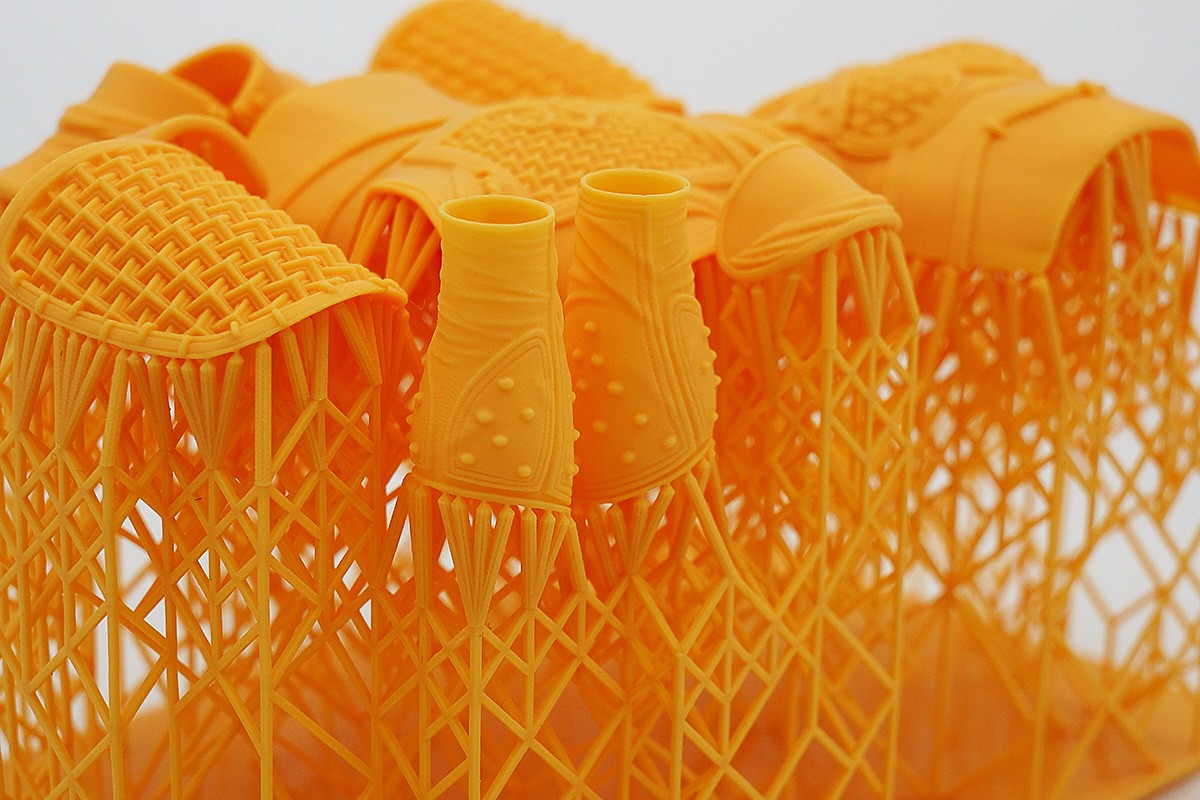
Depending on the light source and curing method, photopolymer 3D printing can be divided into several technical branches, among which SLA, DLP, and LCD are the three most mainstream types.
II. Mainstream Technology Types
1. SLA (Stereolithography)
SLA (Stereolithography) , invented in 1986, was the world's first commercially available 3D printing technology.
- Principle : An ultraviolet laser beam (mainstream wavelength 355nm or 405nm) is used to control the beam path through a galvanometer system, scanning and curing the cross-sectional pattern of each layer on the surface of liquid resin point by point . After each layer is completed, the platform rises a certain height (approximately 0.05-0.1mm), and the scanning is repeated after the new resin covers the surface until the model is complete.
- Features :
- Extremely high precision : the laser spot diameter can be as small as 0.01mm, which can present micron-level fine details.
- Smooth surface : The curing path is continuous and smooth, resulting in an excellent surface finish on the finished product.
- Slower speed : Point-by-point scanning results in longer printing times.
- Expensive equipment : Industrial-grade SLA equipment costs between 100,000 and 1 million yuan, while desktop entry-level equipment costs around 16,800 yuan.
- Fewer size restrictions : Larger sample sizes can be printed.
- Typical applications : jewelry design, precision molds, dental implants, and high-precision industrial prototyping.
2. DLP (Digital Light Processing)
DLP (Digital Light Processing) emerged around 2000 and is based on Texas Instruments' Digital Micromirror Device (DMD) technology.
- Principle : After the image signal is digitized, ultraviolet light is projected onto the cross-sectional pattern of the entire layer in the form of surface light through the micromirror array on the DMD chip , so as to achieve whole-layer curing.
- Features :
- High printing speed : It uses "surface forming" instead of "dot scanning", which is much faster than SLA.
- High precision and smooth surface : The model has high precision and requires almost no polishing except for the support.
- The equipment cost is relatively high : the entry-level price for DLP is about 3,800 yuan.
- Limited printing size : Mostly desktop-level devices, which cannot meet the needs of large industrial parts.
- Long light source lifespan : The light source module of a DLP projector can last for 20,000-50,000 hours.
- Typical applications : dental molds, jewelry models, product development verification, scientific research and education.
3. LCD (Liquid Crystal Display Photopolymerization) / MSLA (Mask Stereolithography)
LCD (Liquid Crystal Display) , also known as MSLA (Masked Stereolithography) , is a technology that has emerged in recent years and is developed based on DLP technology.
- Principle : An LCD screen replaces the projection light path of a DLP (Digital Laser Point) system. Ultraviolet light passes through selectively transparent pixel areas on the LCD screen, irradiating the resin and causing it to cure. The principle is similar to that of mobile phone screen imaging.
- Features :
- Extremely low cost : LCD entry-level prices start at only about 800 yuan, significantly lowering the entry barrier for photopolymer printing.
- High resolution : LCD screens can achieve very high pixel resolution.
- Low light power : Only about 10% of the light energy can penetrate the LCD screen, and 90% is absorbed, resulting in a relatively slow printing speed.
- Limited screen lifespan : LCD screens are consumables and need to be replaced regularly. The latest monochrome screens have a theoretical lifespan of over 2000 hours.
- The light uniformity is slightly inferior : approximately 70-85%, lower than the over 92% of DLP.
- Typical applications : consumer-grade figurines, personal hobbyists, educational beginners, and low-cost prototyping.
III. Emerging Technologies
In addition to the three mainstream technologies mentioned above, there are several emerging photopolymerization technologies designed for specific needs:
|
technology |
Core features |
Application areas |
|
CLIP (Continuous Liquid Surface Manufacturing) |
By utilizing an oxygen-permeable membrane to create a "dead zone" to inhibit curing, continuous, delamination-free printing is achieved, making it tens to hundreds of times faster than traditional technologies. |
Industrial-grade rapid production |
|
MJP (Multi-head Printer ) |
It uses an inkjet printhead to spray photosensitive resin, which is then cured layer by layer by ultraviolet light, allowing for simultaneous printing of multiple materials . |
Precision molds, multi-material models |
|
TPP (Two-Photon Polymerization) |
nanoscale solidification can be achieved at the focal point , with a lateral linewidth reaching 160 nm. |
Micro-nano manufacturing, biomedicine |
These new technologies have advantages such as high precision and compatibility with multiple materials, but due to factors such as large equipment size and high cost, they are currently mainly used in the industrial field -1 .
IV. Comparison of Core Differences between SLA, DLP, and LCD
|
Comparison Dimensions |
SLA |
DLP |
LCD / MSLA |
|
Light source method |
Ultraviolet laser point-by-point scanning |
DMD Micro Mirror Light Projection |
LCD screen pixel mask |
|
Curing method |
Point curing |
Surface curing |
Surface curing |
|
Printing speed |
Slower |
quick |
medium |
|
Precision/Surface Quality |
Extremely high, smoothest - |
high- |
High resolution but slightly inferior light uniformity. |
|
Equipment costs |
High-end (industrial grade, 100,000-1,000,000) |
Intermediate (entry-level, approximately NT$3,800) |
Low (starting from around 800 yuan for beginners) |
|
Light source lifespan |
longer |
Extremely long (20,000-50,000 hours) |
Limited (approximately 2000 hours) |
|
Print size |
Fewer restrictions, can be made in large sizes |
Mostly desktop-grade, with size limitations. |
Desktop-based |
|
Materials System |
Mostly closed systems |
Mostly open systems |
Mostly open systems |
V. Photocurable Printing Materials
The material used in photopolymer 3D printing is usually called photopolymer resin , which is a complex polymer mixture with a complex chemical composition .
It is not a single substance, but a "formula" mainly composed of the following four types of chemical components:
1. Core framework: Oligomer / Prepolymer
· Function and characteristics: This is the core framework that determines the final physical and mechanical properties (such as hardness, flexibility, and heat resistance) of the printed part. It accounts for approximately 30%-50% of the total weight of the resin . Its molecular ends contain active functional groups, which can undergo polymerization reactions under the action of photoinitiators to form a polymer network.
· Main types:
o Epoxy acrylates : such as bisphenol A epoxy acrylate . After curing, they have high hardness, good chemical resistance, and strong adhesion, making them a common choice for manufacturing rigid, high-strength parts.
o Polyurethane acrylate (PUA) : Provides excellent elasticity, toughness and impact resistance , and is often used to make rubber-like flexible or elastic parts.
o Polyester acrylate : Its properties are between the two mentioned above, usually balancing flexibility and hardness, and its cost is relatively low.
o Other types include unsaturated dicarboxylic acid half esters , acrylic resins , and low-viscosity oligomers developed for specific needs .
· Major suppliers:
o International giants: Arkema , BASF , Evonik , Covestro , Henkel , and IGM Resins.
o Domestic leaders: Runao Chemical (a member of Feikai Materials) , Haohui New Materials, Santong Materials, Hengzhiguang, Bahe New Materials, Songda New Materials, and Guangyi Chemical.
o Other: Bomar (Hannair Chemicals).
2. Reactive Diluent / Monomer
- Functions and characteristics : Its main function is to adjust the viscosity of the resin and improve its fluidity. At the same time, it participates in the polymerization reaction , becomes part of the cured product, and has an important influence on the hardness, flexibility and other properties of the final product.
- Main types : Mostly monomers containing unsaturated double bonds such as acryloyloxy and methacryloyloxy . Based on the number of reactive functional groups in the molecule, they can be divided into:
- Monofunctional monomers : such as isobornyl acrylate (IBOA) and acrylmorpholine (ACMO) .
- Bifunctional monomers : such as diacrylates .
- Monomers with trifunctional groups or higher : such as trimethylolpropane trimethacrylate (TMPTMA) and cyclotrimethylolpropane methyl acetal acrylate (CTFA) . Higher functionality generally results in faster curing speed and higher crosslinking density.
- Major suppliers :
- International giants : Arkema , BASF , IGM Resins.
- Domestic companies : Jiuri New Materials, Jiahe Chemical, Jiangsu Xinsu New Materials, Runao Chemical, Guangyi Chemical, and Lima Materials.
3. Reaction switch : Photoinitiator
- Function and characteristics: It acts as a "switch" for photocuring reactions . After absorbing ultraviolet light of a specific wavelength (such as 405nm), it decomposes to produce active fragments (free radicals or cations) that can initiate polymerization reactions. Although present in small amounts (approximately 1%-5%), these fragments are crucial.
- Main types:
- Free radical photoinitiators: the most widely used, suitable for acrylate systems.
- Cationic photoinitiators: suitable for epoxy resin systems, with advantages such as being unaffected by oxygen inhibition and having low shrinkage.
- Major suppliers:
- International giants: IGM Resins (a global leader), BASF .
- Domestic leaders: Jiuri New Materials (a listed company on the Science and Technology Innovation Board, a leading domestic photoinitiator manufacturer) and Hubei Gurun Technology.
4. Functional additives: various additives
To achieve specific performance or improve printing results, a small amount of additives may be added to the formula:
- Toughening agents : improve the impact resistance of the finished product.
- Leveling agents : make the surface of liquid resin smoother.
- Defoamer : Reduces air bubbles in resin.
- Polymerization inhibitor : Prevents resin from accidentally curing during storage or printing.
- Dyes/pigments : Give resins different colors.
- Fillers : such as ceramic powder, glass fiber, etc., are used to enhance specific properties.
Shanghai Canal provides a variety of components for photopolymer 3D printing:
Toughening agent: Mitsubishi's silicone core-shell toughening agent from Japan can effectively improve toughness, wear resistance and impact strength, and is easy to disperse.
https://www.canalchem.com/products/engineering-plastics/%E6%8A%97%E5%86%B2%E5%87%BB%E6%94%B9%E6%80%A7,%E5%B7%A5%E7%A8%8B%E5%A1%91%E6%96%99,pc%E5%90%88%E9%87%91,%E4%B8%89%E8%8F%B1.ht