
Applications of Yttrium Oxide (Y₂O₃) in Electronic Ceramics
Yttrium oxide (chemical formula Y₂O₃), also known as yttria, is an important rare-earth functional oxide. It is widely used in electronic ceramics, advanced structural ceramics, insulating ceramics and functional ceramics.
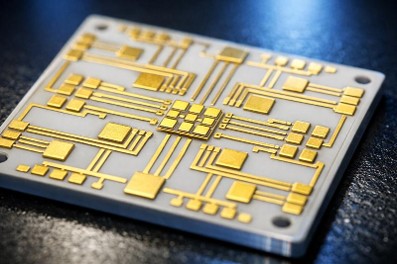
Yttrium oxide (chemical formula Y₂O₃), also known as yttria, is an important rare-earth functional oxide. It is widely used in electronic ceramics, advanced structural ceramics, insulating ceramics and functional ceramics.
Electronic ceramics are materials for electronic components that are manufactured by exploiting the electrical, dielectric, piezoelectric, insulating, semiconducting or ionic-conducting properties of ceramic materials. They mainly include:
• Dielectric ceramics: used in capacitors, dielectric substrates, etc.
• Insulating ceramics: used in insulating structural parts of electronic equipment.
• Piezoelectric ceramics: used in sensors, transducers and actuators.
• Semiconductor ceramics: used in thermistors, gas-sensing elements, etc.
• Ion-conducting ceramics: used in oxygen sensors and solid oxide fuel cells.
• High-performance structural ceramics: used in semiconductor equipment and high-temperature electronic components.
In these materials, yttrium oxide does not perform only one function. Depending on the ceramic system and formulation, it mainly plays the following five roles:
• Sintering aid: reduces the difficulty of densification and promotes sintering.
• Grain growth regulator: adjusts grain size and grain-boundary structure.
• Crystal structure stabilizer: stabilizes the high-temperature or metastable crystal phases of certain ceramic materials.
• Electrical property modifier: adjusts the electrical properties of the material by changing the defect structure, oxygen vacancies and grain-boundary characteristics.
• Functional ceramic constituent: directly participates in forming ceramic materials with specific electrical properties.
Among these, the most mature and most important applications of yttrium oxide are as a sintering aid and crystal structure stabilizer for advanced ceramics, followed by oxygen-ion-conducting ceramics and specialty electronic ceramics.
II. Yttrium Oxide as a Sintering Aid for Electronic CeramicsThis is a very important application of yttrium oxide in the field of advanced ceramics.
1. Why do electronic ceramics need sintering aids?
Ceramics are usually made from oxide, nitride or carbide powders through forming and high-temperature sintering.
During sintering, the powder particles must contact, diffuse and bond with one another, gradually forming a dense ceramic structure.
However, many high-performance ceramics have the following problems:
• High sintering temperature.
• Powder particles do not readily bond fully with one another.
• Abnormal grain growth tends to occur during sintering.
• Residual pores are easily left inside the material.
• Insufficient density, which affects mechanical and electrical properties.
An appropriate amount of sintering aid therefore needs to be added to improve the sintering behaviour of the ceramic.
Yttrium oxide can promote the densification of certain ceramic systems through mechanisms such as solid-state reaction, grain-boundary diffusion or liquid-phase formation.
2. Mechanism of yttrium oxide as a sintering aid
As a sintering aid, yttrium oxide acts mainly in the following ways.
(1) Promoting grain-boundary diffusion
During high-temperature sintering, yttrium oxide can affect the chemical composition of ceramic particle surfaces and grain boundaries, change grain-boundary diffusion behaviour, and promote bonding between particles.
(2) Forming a grain-boundary second phase
In some ceramic systems, yttrium oxide reacts with other oxide impurities or additives to form a grain-boundary phase.
The grain-boundary phase can affect particle rearrangement, mass transport and densification.
(3) Promoting liquid-phase sintering
In specific material systems, yttrium oxide can form a low-melting or readily flowing liquid phase with other oxides, promoting particle rearrangement and pore elimination.
Note that yttrium oxide is not a universal liquid-phase sintering agent for all ceramic systems; its effect depends on the matrix material and the other added components.
(4) Regulating grain growth
Yttrium oxide may affect grain-boundary migration velocity through grain-boundary segregation, second-phase formation and similar mechanisms, thereby changing grain growth behaviour.
3. Main application materials
As a sintering aid, yttrium oxide is mainly used in the following advanced ceramic systems:
|
Ceramic material |
Main role of yttrium oxide |
Typical applications |
|
Silicon nitride (Si₃N₄) |
Sintering aid, grain-boundary modification |
High-performance insulating substrates, ceramic structural parts |
|
Alumina (Al₂O₃) |
Sintering aid, grain regulation |
Electronic substrates, insulating ceramics |
|
Aluminum nitride (AlN) |
Auxiliary sintering, promotes densification |
High-thermal-conductivity electronic substrates |
|
Zirconia (ZrO₂) |
Crystal phase stabilizer |
Sensors, electrolyte ceramics |
|
Silicon carbide (SiC) |
Sintering and grain-boundary modification component for specific systems |
Power electronics and high-temperature ceramic parts |
Among these, silicon nitride, aluminum nitride and zirconia are the application directions most worth focusing on.
III. Application of Yttrium Oxide in Aluminum Nitride (AlN) Electronic CeramicsKey application direction: high-thermal-conductivity electronic substrates
Aluminum nitride (AlN) is a very important electronic ceramic material. It has high thermal conductivity, good electrical insulation, and a coefficient of thermal expansion that is relatively well matched to silicon.
Main applications:
• Heat-dissipation substrates for high-power LEDs.
• Ceramic substrates for IGBT power modules.
• Power semiconductor packaging.
• Heat-dissipation components for high-power electronic devices.
• High-frequency communication and microwave electronic substrates.
• Packaging materials for highly integrated chips.
1. Why does AlN need yttrium oxide?
Although AlN has a very high theoretical thermal conductivity, there is an important problem in actual sintering:
AlN powder surfaces usually carry a certain amount of aluminum oxide (Al₂O₃) or an oxygen-containing surface layer.
These oxygen impurities readily enter the AlN lattice, forming defects such as aluminum vacancies and increasing phonon scattering, which reduces the thermal conductivity of the material.
In addition, AlN has a strongly covalent bond structure, atomic diffusion is difficult, and high-density ceramics are not easily obtained by high-temperature sintering alone.
A sintering aid is therefore usually required.
Yttrium oxide (Y₂O₃) is one of the classic sintering aids for AlN ceramics.
2. Mechanism of yttrium oxide in AlN
Function 1: promoting sintering densification
During high-temperature sintering, Y₂O₃ can react with the Al₂O₃ on the AlN powder surface to form a yttrium aluminate liquid phase.
The main phases that may form include:
• YAG: Y₃Al₅O₁₂, yttrium aluminum garnet.
• YAP: YAlO₃, yttrium aluminum perovskite.
• YAM: Y₄Al₂O₉, yttrium aluminum monoclinic oxide.
The formation of these phases depends on the Y₂O₃ addition level, the oxygen content, and the sintering temperature and atmosphere.
The high-temperature liquid phase improves particle wetting and rearrangement and promotes densification of the AlN ceramic.
Function 2: immobilizing oxygen impurities
Yttrium oxide reacts with the surface oxide, which allows part of the oxygen impurities to transfer from the AlN lattice into the grain-boundary second phase.
This reduces the lattice oxygen content and phonon scattering, which helps improve the thermal conductivity of the AlN ceramic.
Function 3: improving the grain-boundary structure
Yttrium oxide can affect the composition and distribution of the grain-boundary phase in AlN, and thereby change the insulating properties, thermal conductivity and high-temperature stability of the ceramic.
Note that more grain-boundary second phase is not necessarily better. An excessive residual grain-boundary phase may impede heat conduction, so the Y₂O₃ addition must be properly controlled.
3. Effect of yttrium oxide on AlN properties
|
Performance indicator |
Main role of yttrium oxide |
|
Sintered density |
Promotes densification |
|
Thermal conductivity |
Helps improve thermal conductivity by reducing the lattice oxygen content |
|
Electrical insulation |
Affects grain boundaries and the defect structure |
|
Mechanical strength |
Acts by improving density and microstructure |
|
Grain structure |
Regulates grain growth and the grain-boundary second phase |
|
High-temperature performance |
Depends on the composition and stability of the grain-boundary phase |
According to a 2024 study on AlN substrates published in Journal of Alloys and Compounds, Y₂O₃ was used as the sintering aid for the commercial AlN substrates investigated, and the samples reached a thermal conductivity of 172–188 W/(m·K), demonstrating the important role of yttrium oxide in high-thermal-conductivity AlN ceramics.
4. Specific application products
Typical products include:
• AlN ceramic substrates.
• AlN power module insulating substrates.
• AlN electronic packaging substrates.
• AlN high-thermal-conductivity heat spreaders.
• AlN high-frequency circuit substrates.
For yttrium oxide powder producers, AlN ceramics are a downstream market well worth attention.
Potential customers include AlN ceramic powder producers, electronic ceramic substrate manufacturers and power semiconductor packaging material companies.
Customers usually pay close attention to the purity, particle size, dispersibility, metal impurities and batch-to-batch consistency of yttrium oxide.
IV. Yttrium Oxide in Silicon Nitride (Si₃N₄) Electronic CeramicsSilicon nitride (Si₃N₄) is an advanced ceramic with excellent mechanical properties, thermal shock resistance and electrical insulation.
In electronics it is mainly used for:
• Power electronic module substrates.
• Structural parts for high-temperature electronic equipment.
• Precision ceramic components for semiconductor equipment.
• Structural materials for high-frequency electronic equipment.
• Special radar wave-transmitting and microwave windows.
1. Why does Si₃N₄ need yttrium oxide?
Si₃N₄ has a strongly covalent bond structure and a low self-diffusion coefficient, so it is very difficult to obtain high-density material by ordinary solid-state sintering.
A sintering aid is usually required.
A composite sintering aid composed of Y₂O₃ and Al₂O₃ is a classic formulation system for Si₃N₄ ceramics.
2. Mechanism of yttrium oxide
During sintering, yttrium oxide and aluminum oxide can react with the SiO₂ on the surface of the Si₃N₄ particles to form a silicate or oxynitride liquid phase.
Formation of the liquid phase promotes:
• Rearrangement of Si₃N₄ particles.
• Mass transport through the liquid phase.
• Transformation of α-Si₃N₄ to β-Si₃N₄.
• Further growth of β-Si₃N₄ grains.
• Densification of the ceramic.
The final result is a silicon nitride ceramic with an interlocking, elongated columnar grain structure.
This microstructure helps improve the fracture toughness, mechanical strength and thermal shock resistance of the material.
3. Effect of yttrium oxide on Si₃N₄ properties
|
Performance indicator |
Main role |
|
Sintering performance |
Promotes liquid-phase sintering and densification |
|
Grain structure |
Promotes β-Si₃N₄ grain growth |
|
Mechanical strength |
Improves the microstructure and increases strength |
|
Fracture toughness |
Improved through elongated columnar grains and crack-deflection mechanisms |
|
Thermal stability |
Favours the formation of a stable high-temperature ceramic structure |
|
Dielectric properties |
Affected by the grain-boundary phase, porosity and sintering formulation |
In a 2026 study published by Purdue University, silicon nitride ceramics were prepared using 6 wt% Y₂O₃ and 2 wt% Al₂O₃ as sintering aids, and their microstructure, mechanical properties and dielectric properties were investigated.
4. Specific application products
These mainly include:
• Si₃N₄ ceramic substrates.
• AMB (active metal brazing) ceramic substrates.
• Power semiconductor packaging substrates.
• High-temperature insulating ceramic parts.
• Structural ceramics for semiconductor equipment.
Among these, Si₃N₄ AMB substrates are an important product in the power semiconductor field and are widely used in new energy vehicles, power electronics and high-power modules. Here yttrium oxide acts mainly as a sintering aid rather than as the main functional material of the final product.
V. Yttrium Oxide in Barium Titanate (BaTiO₃) Dielectric CeramicsThis is a particularly noteworthy application of yttrium oxide in the field of electronic functional ceramics.
Barium titanate (BaTiO₃) is a typical perovskite-structured ferroelectric ceramic with a high dielectric constant and good dielectric properties.
It is one of the core dielectric materials for multilayer ceramic capacitors (MLCCs).
1. Why does BaTiO₃ need yttrium oxide?
Although pure BaTiO₃ has a high dielectric constant, a series of performance requirements must be met in actual MLCC manufacturing:
• High dielectric constant.
• Good dielectric temperature stability.
• Low dielectric loss.
• Good insulation resistance.
• High breakdown voltage.
• Good high-temperature and long-term reliability.
BaTiO₃ therefore usually needs to be doped and modified in industrial production.
Common additives include:
MgO; MnO₂; Y₂O₃; Dy₂O₃; Ho₂O₃; SiO₂; BaCO₃ and other formulation components.
Among them, Y₂O₃ is a representative rare-earth doping modifier.
2. Mechanism of yttrium oxide in BaTiO₃
BaTiO₃ has a typical ABO₃ perovskite crystal structure:
• A site: Ba²⁺.
• B site: Ti⁴⁺.
• O site: O²⁻.
When Y₂O₃ is added, Y³⁺ may enter the BaTiO₃ lattice and occupy the Ba²⁺ or Ti⁴⁺ sites. Because the valence of Y³⁺ differs from that of Ba²⁺ and Ti⁴⁺, lattice charge compensation and changes in the defect structure are induced. The specific effect depends on the doping level, oxygen partial pressure, sintering atmosphere and other additives.
The main effects include:
(1) Adjusting the dielectric constant
After Y³⁺ enters the BaTiO₃ lattice, it can change the crystal structure and polarization behaviour, thereby affecting the dielectric constant of the material.
(2) Adjusting grain size
An appropriate amount of yttrium oxide can affect grain growth behaviour and improve microstructural uniformity.
(3) Improving dielectric temperature stability
By adjusting the doping level and grain structure, the dielectric temperature characteristics of the material can be optimized so that it more readily meets the performance requirements of MLCC dielectric materials such as X7R.
(4) Affecting insulation resistance and grain-boundary properties
Yttrium oxide may change the defect distribution and grain-boundary resistance of the material through lattice doping and grain-boundary segregation.
3. Doping behaviour of yttrium oxide in BaTiO₃
Studies have found that the site occupancy of Y³⁺ in BaTiO₃ is not fixed but depends on the addition level.
A study published in 2016 in Journal of the American Ceramic Society reported that:
• At low Y₂O₃ addition levels, Y³⁺ preferentially enters the A site, substituting for Ba²⁺.
• As the addition level increases, Y³⁺ may further enter the B site, substituting for Ti⁴⁺.
• Beyond a certain solubility limit, excess yttrium may segregate at grain boundaries or even form a Y₂Ti₂O₇ second phase.
Two characteristic transition points at approximately 0.50 mol% and 1.00 mol% were observed in that study, but these values belong to specific formulations and process conditions and cannot be used directly as a general addition standard for all MLCC formulations.
4. Effect of yttrium oxide on MLCC performance
|
Performance indicator |
Possible role of yttrium oxide |
|
Dielectric constant |
Regulates lattice polarization behaviour |
|
Dielectric temperature characteristics |
Improves temperature stability |
|
Grain size |
Regulates grain growth |
|
Insulation resistance |
Affects the defect structure and grain-boundary resistance |
|
Dielectric loss |
Exerts an influence through doping and microstructural changes |
|
Reliability |
Works synergistically with other dopants to improve material performance |
5. Specific application products
Mainly used in:
• MLCC dielectric ceramic powders.
• High-dielectric-constant ceramics.
• Dielectric systems with temperature characteristics such as X7R and X5R.
• High-reliability ceramic capacitors.
• Specialty dielectric ceramics.
VI. Yttrium Oxide in Zirconia (ZrO₂) Electronic CeramicsKey application direction: oxygen sensors and solid electrolytes
Zirconia (ZrO₂) is a ceramic material with good high-temperature stability and oxygen-ion conduction.
By adding yttrium oxide, yttria-stabilized zirconia (YSZ) can be prepared.
YSZ is one of the most important application systems of yttrium oxide in functional electronic ceramics.
1. Why can yttrium oxide stabilize zirconia?
Pure zirconia has a crystal structure transformation problem:
• Monoclinic phase: stable at room temperature.
• Tetragonal phase: stable at higher temperatures.
• Cubic phase: stable at even higher temperatures.
Transformations between these phases cause volume changes that may lead to cracking of the ceramic.
After Y₂O₃ is added, Y³⁺ substitutes for part of the Zr⁴⁺, changing the crystal structure and introducing oxygen vacancies, thereby stabilizing the tetragonal or cubic phase.
The defect reaction can be written as:
Y₂O₃ → 2Y′Zr + VO•• + 3OO×
where:
• Y′Zr: Y³⁺ occupying the Zr⁴⁺ site.
• VO••: oxygen vacancy.
• OO×: normal lattice oxygen.
Oxygen vacancies provide channels for oxygen-ion migration, giving YSZ good oxygen-ion conductivity.
2. Main roles of yttrium oxide in YSZ
(1) Stabilizing the crystal structure: suppressing unfavourable phase transformations of zirconia during temperature changes.
(2) Forming oxygen vacancies: providing channels for oxygen-ion migration.
(3) Improving ionic conductivity: enabling the material to conduct oxygen ions at high temperature.
(4) Improving thermal stability: increasing the structural stability of the material in high-temperature environments.
3. Specific applications
A. Automotive oxygen sensors
Automotive oxygen sensors usually use YSZ as the solid electrolyte.
When different oxygen partial pressures exist on the two sides of the sensor, an oxygen concentration cell potential is generated, and the oxygen content in the engine exhaust can be determined by measuring the voltage.
Mainly used for:
• Air-fuel ratio control of automotive engines.
• Exhaust emission monitoring.
• Engine combustion efficiency control.
B. Industrial oxygen sensors
YSZ can be used in high-temperature industrial oxygen sensors to detect the oxygen concentration in industrial furnaces, heat-treatment furnaces and other high-temperature environments.
C. Solid oxide fuel cells (SOFC)
In an SOFC, YSZ serves as the solid electrolyte and conducts oxygen ions.
Its basic working principle is:
• Oxygen in the air gains electrons at the cathode to form oxygen ions.
• The oxygen ions migrate through the YSZ electrolyte to the anode.
• The oxygen ions react with the fuel.
• Electrons flow through the external circuit to form a current.
YSZ is therefore a key core ceramic material for SOFCs.
D. Solid oxide electrolysis cells (SOEC)
SOEC is a technology for producing hydrogen by high-temperature electrochemical steam electrolysis.
YSZ can serve as the oxygen-ion-conducting electrolyte and performs the oxygen-ion transport function during electrolysis.
4. Typical YSZ material classification
|
Material type |
Yttrium oxide content (typical) |
Main applications |
|
3YSZ |
Approx. 3 mol% |
High-strength zirconia structural ceramics |
|
8YSZ |
Approx. 8 mol% |
Oxygen-ion-conducting electrolyte |
|
10YSZ |
Approx. 10 mol% |
Specific stabilized zirconia ceramic systems |
Different YSZ products differ in formulation, crystal phase structure and application requirements, so final performance cannot be judged from yttrium oxide content alone.
VII. Yttrium Oxide in Alumina (Al₂O₃) Electronic CeramicsAlumina is one of the most widely used materials in electronic ceramics. It has good electrical insulation, mechanical strength, heat resistance and chemical stability.
Mainly used in:
• Ceramic substrates for IC packaging.
• Insulating substrates for electronic components.
• High-voltage insulating ceramics.
• Ceramic parts for semiconductor equipment.
• Ceramic packaging housings for electronics.
1. Mechanism of yttrium oxide
Yttrium oxide can serve as a modifying additive in some alumina ceramic systems, mainly affecting:
(1) Sintering densification
Under specific formulations and sintering conditions, yttrium oxide can participate in grain-boundary reactions and affect the sintering behaviour of the material.
(2) Grain growth control
By changing the grain-boundary composition and grain-boundary migration behaviour, it affects the grain size and microstructure of alumina.
(3) High-temperature structural stability
In specific composite ceramic systems, yttrium aluminum oxide phases can be used to improve the high-temperature structural characteristics of the material.
Note that pure alumina ceramics do not generally rely on Y₂O₃ for sintering; here yttrium oxide is more of a modifying component for specific formulations rather than a required additive for all alumina electronic ceramics.
2. Specific application products
These mainly include:
• Alumina electronic substrates.
• Semiconductor insulating ceramics.
• High-temperature electronic packaging ceramics.
• Precision electronic ceramic structural parts.
VIII. Yttrium Oxide in Specialty Dielectric Ceramics and Other Functional CeramicsBesides the main ceramic systems described above, yttrium oxide can also be used in other functional electronic ceramics.
1. Piezoelectric ceramics
Piezoelectric ceramics can convert mechanical energy and electrical energy into each other and are widely used in sensors, ultrasonic transducers and precision actuators.
In some piezoelectric ceramic systems, yttrium oxide can act as a rare-earth dopant, affecting:
• The crystal defect structure.
• Grain size.
• Domain structure and domain wall motion.
• Dielectric properties.
• Piezoelectric response.
For example, in some PZT (lead zirconate titanate) ceramic systems, the effect of rare-earth ion doping on material properties can be studied.
However, yttrium oxide is not an essential component of all PZT ceramics; the specific effect depends on the formulation and the doping method.
2. Resistor ceramics and sensor materials
Yttrium oxide can serve as a doping or modifying component in some ceramic systems, participating in regulating the grain-boundary structure and defect concentration.
In specific systems, it can affect the resistivity and temperature response characteristics of the material.
However, in products such as conventional ZnO varistor ceramics and common NTC thermistor ceramics, yttrium oxide is not a commonly used main additive.
3. Specialty high-temperature insulating ceramics
Yttrium oxide itself has good insulating properties and high-temperature stability. Yttrium oxide ceramics can be prepared directly, or composite ceramics can be formed with other oxides.
Mainly used for:
• High-temperature insulating parts.
• Insulating structural parts for special electronic equipment.
• Ceramic parts for high-temperature vacuum equipment.
• Corrosion-resistant insulating parts for semiconductor equipment.
IX. Summary of the Main Applications of Yttrium Oxide in Electronic CeramicsTo understand more intuitively the role of yttrium oxide in different electronic ceramic systems, the following summary can be made:
|
Ceramic system |
Main role of yttrium oxide |
Typical downstream product |
Application field |
|
AlN (aluminum nitride) |
Sintering aid, immobilizes oxygen impurities |
High-thermal-conductivity ceramic substrates |
Power semiconductors |
|
Si₃N₄ (silicon nitride) |
Sintering aid, grain-boundary modification |
AMB ceramic substrates |
Power electronics |
|
BaTiO₃ (barium titanate) |
Rare-earth doping, dielectric property modification |
MLCC dielectric materials |
Passive electronic components |
|
ZrO₂ (zirconia) |
Crystal phase stabilizer, forms oxygen vacancies |
YSZ electrolytes |
Sensors, fuel cells |
|
Al₂O₃ (alumina) |
Sintering and grain-boundary modification for specific systems |
Insulating ceramic substrates |
Electronic packaging |
|
PZT piezoelectric ceramics |
Rare-earth doping and defect regulation |
Piezoelectric sensors |
Sensors and actuators |
|
Y₂O₃ bulk ceramics |
Insulation, high-temperature resistance, corrosion resistance |
Yttrium oxide ceramic parts |
Semiconductor equipment |
From the perspective of a yttrium oxide raw material supplier, the quality requirements for yttrium oxide differ markedly between electronic ceramic systems.
Purity alone is not enough; particle size, specific surface area, dispersibility, impurity content and sintering activity must also be considered.
1. Powder index requirements for different applications
|
Application field |
Purity focus |
Key quality indicators |
Main product form |
|
AlN (aluminum nitride) |
High purity |
Particle size, dispersibility, impurities such as Fe, Si and Ca |
Ceramic-grade powder |
|
Si₃N₄ (silicon nitride) |
High purity |
Particle size, specific surface area, sintering activity |
Ceramic-grade powder |
|
BaTiO₃ (barium titanate) |
High purity, low impurities |
Rare-earth impurities, particle size, chemical homogeneity |
Electronic-grade additive |
|
ZrO₂ (zirconia) |
Determined by the formulation |
Y₂O₃ content, chemical purity, particle size |
Ceramic-grade powder |
|
Al₂O₃ (alumina) |
Determined by the formulation |
Particle size, impurities, dispersibility |
Ceramic additive |
|
PZT piezoelectric ceramics |
High purity |
Metal impurities, chemical composition, dispersibility |
Electronic ceramic additive |
|
Y₂O₃ bulk ceramics |
High purity |
Sintering activity, particle size, densification capability |
High-purity ceramic powder |
The above are reference directions for product development and procurement, not a unified industry standard.
2. Key technical indicators for yttrium oxide powder
(1) Chemical purity
Electronic ceramics are sensitive to metal impurities, and particular attention should be paid to: Fe (iron), Si (silicon), Ca (calcium), Na (sodium), Mg (magnesium), Cu (copper) and Ni (nickel). These impurities may affect the grain-boundary structure, resistivity, dielectric loss and sintering performance of the ceramic. Purity is generally required to be 4N or above.
(2) Particle size and particle size distribution
Particle size directly affects the dispersion of yttrium oxide in the ceramic powder and its sintering reactivity. Fine powders usually have a higher specific surface area, which is favourable for improving reactivity, but severe agglomeration may also affect the uniformity of the final ceramic.
(3) Dispersibility
Yttrium oxide needs to be uniformly dispersed in ceramic powders such as AlN, Si₃N₄ and BaTiO₃.
Non-uniform dispersion may cause localized abnormal sintering, uneven distribution of the grain-boundary phase and fluctuations in ceramic performance.
(4) Sintering activity
For advanced ceramics such as AlN and Si₃N₄, the reactivity of yttrium oxide directly affects the sintering process.
Customers therefore usually focus not only on the purity of yttrium oxide but also on its crystal structure, particle size, specific surface area and batch-to-batch consistency.
Shanghai Canal supplies SOLVAY nano yttrium oxide, which can be used in various electronic ceramic products, with purity up to 4N.
https://www.canalchem.com/products/prd-category-004/product-019.html