
High-purity lead oxide production process
High-purity lead oxide (PbO, purity ≥ 99.99%) is an important functional material in the electronics industry, with core applications concentrated in three main areas: dielectric ceramics, thin-film deposition, and optical devices. In multilayer ceramic capacitors (MLCCs), it serves as a primary component of the dielectric layer, effectively enhancing capacitance and temperature stability to meet miniaturization demands. In physical vapor deposition (PVD) processes, high-purity lead oxide is fabricated into sputtering targets or evaporation materials used to deposit ferroelectric and piezoelectric thin films (such as PZT) as well as functional oxide layers, which are widely applied in semiconductor chips, MEMS devices, and optical coatings. In electronic ceramics, it acts as a foundational raw material for synthesizing relaxor ferroelectrics like lead magnesium niobate (PMN), and helps adjust the resistivity and Curie temperature of ceramics to improve their electrical performance. Additionally, leveraging its high density and radiation-absorption properties, high-purity lead oxide is used in the manufacturing of CRT glass and X-ray shielding windows, as well as serving as an optical thin-film material for anti-reflective coatings.
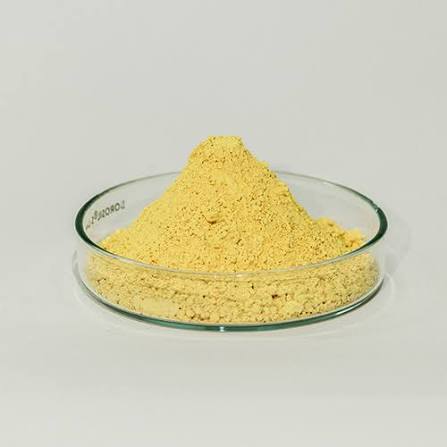
High-purity lead oxide (PbO, purity ≥ 99.99%) is an important functional material in the electronics industry, with core applications concentrated in three major areas: dielectric ceramics, thin film deposition, and optical devices.
In multilayer ceramic capacitors (MLCCs), lead oxide serves as a major component of the dielectric layer, effectively improving capacitance and temperature stability to meet miniaturization requirements. In physical vapor deposition (PVD) processes, high-purity lead oxide is used as a sputtering target or evaporation material for depositing ferroelectric and piezoelectric thin films (such as PZT) and functional oxide layers, widely applied in semiconductor chips, MEMS devices, and optical coatings. In electronic ceramics, it is a fundamental raw material for synthesizing relaxor ferroelectrics such as lead magnesium niobate (PMN), and can adjust the resistivity and Curie temperature of ceramics, improving electrical performance. Furthermore, utilizing its high density and X-ray absorption properties, high-purity lead oxide is used to manufacture CRT glass and X-ray shielding windows, and also as an optical thin film material for anti-reflective coatings.
The methods for producing high-purity lead oxide generally include the following:
I. Hydrometallurgical Process (Alkali Process)
This process uses lead paste from waste lead-acid batteries as raw material and produces high-purity lead oxide through steps such as leaching with sodium hydroxide solution, cooling crystallization, and recrystallization purification.
Core steps and parameters:
Ø Step 1: Raw material pretreatment and charging
Waste lead-acid batteries were charged in series with the following parameters: current 0.2C, voltage limit 15V/cell, charging time 10 hours. The batteries were then crushed to separate lead paste, waste acid, lead grids, and plastic. The lead paste was washed with pure water until pH 7-9, filtered, and its composition was analyzed (after charging, the lead paste contained approximately 50% PbO₂ , 45% lead, and 5% lead sulfate).
Ø Step 2: Desulfurization reaction
The lead paste is mixed with a 5-10 wt% sodium hydroxide solution for desulfurization. Typical parameters:
- Sodium hydroxide concentration: 5~10wt%
- Molar ratio of NaOH to lead sulfate: 2.5:1 ~ 3:1
- Reaction temperature: 25~35℃
- Reaction time: 5~10min
- Stirring speed: 500 rpm, can simultaneously apply pulsed electric field (pulse voltage 80V, frequency 20Hz)
After desulfurization, the solution is filtered under pressure and the filtrate is recycled: NaOH is added to adjust the pH to 10, the solution is concentrated to 30-50% of its original volume, and then cooled to crystallize and recover sodium sulfate. The remaining filtrate is replenished with NaOH and recycled for desulfurization.
Ø Step 3: Acetic acid leaching and reflux reaction
The desulfurized lead paste was mixed with acetic acid and heated under reflux for reaction:
- Reaction temperature: 90~110℃
- Reaction time: 3~4 hours
- Acetic acid dosage: Prepare a mixture with a total lead molar ratio of 1:4 to 1:4.5.
Ø Step 4: Oxidation-reduction and precipitation
After reflux, while maintaining the temperature, slowly add 5-6% H₂O₂ dropwise to reduce excess PbO₂ until no more bubbles appear. Continue the reaction at this temperature for 1-2 hours, then cool to 30-50℃ and filter. Adjust the pH of the filtrate to 6-8 with NaOH solution, then add 30wt% NaOH solution dropwise while stirring to precipitate lead oxide until no solid precipitates.
Ø Step 5: Separation and Drying
The solid-liquid mixture is filtered, and the filter residue is washed, dried, and pulverized to obtain high-purity lead oxide solid. The lead recovery rate is 98.5%~99.2%, and the purity reaches over 99.99%.
II. Chemical Leaching-Deep Purification-Calcination Method (Citrate Acid Method)
This process utilizes four core technologies: green leaching with citric acid and hydrogen peroxide, deep purification with chelating resin and nanofiltration membrane, hydrothermal synthesis and crystal phase control, and microwave low-temperature calcination. The product purity can reach 99.999% (5N grade), β phase content >99%, and crystal size 50~80nm.
Core steps and parameters:
Ø Step 1: Desulfurization pretreatment
Waste lead paste is mixed with an aqueous solution of a composite desulfurizing agent (sodium carbonate to sodium bicarbonate molar ratio 1:1.5~5) and reacted.
- Feeding ratio: The molar ratio of sulfur (S) in lead paste to sodium (Na) in desulfurizing agent is 1:3~8.
- Solid-liquid mass ratio: 1:10~30
- Desulfurization temperature: room temperature ~ 70℃ (preferably 35℃)
- Desulfurization time: 1~8h (preferably 2h)
After desulfurization, the product is filtered to obtain desulfurized lead paste.
Ø Step 2: Citric acid leaching and crystallization transformation
The desulfurized lead paste reacts with citric acid solution and a reducing agent ( H₂O₂ ) :
- Molar ratio of lead to citric acid: 1:1.5~4 (preferably 1:2)
- Solid-liquid mass ratio: 1:3~15 (preferably 1:5)
- Citric acid solution pH: 2.0~5.0
- Reaction time: 0.5~4h (preferably 1~2h)
- Molar ratio of PbO₂ to H₂O₂ : 1 : 1.2~3
After the reaction, the product was filtered, washed, and dried to obtain the lead citrate precursor.
Ø Step 3: Deep purification (chelating resin-nanofiltration membrane)
The citric acid leachate was subjected to deep purification via a combination of **chelating resin** and **nanofiltration membrane**. The chelating resin exhibits highly selective adsorption of Pb²⁺, effectively removing metallic impurities such as Cu²⁺ and Fe³⁺, which have similar solubility to Pb²⁺ . The nanofiltration membrane , with a pore size of 1-2 nm, can retain impurities such as metal ions. This combined purification technology overcomes the purity bottleneck of traditional crystallization methods, and the resin can be reused more than 10 times.
Ø Step 4: Hydrothermal Synthesis and Crystal Phase Control
The lead oxide crystal phase is controlled by hydrothermal synthesis to ensure that the β phase content is >99%.
Ø Step 5: Microwave low-temperature calcination
Lead citrate precursor was calcined by microwave at low temperature:
- Firing temperature: 300~500℃ (preferably 350~400℃)
- Calcination time: 0.5~6h (preferably 0.3~1h)
The final product is ultrafine lead oxide with an average particle size of less than 1 μm and nanocrystal diameter of 200–500 nm. The lead recovery rate is >95%, and the process energy consumption is reduced by 60–70% compared to traditional methods.
III. Vacuum Arc Melting Technology
This technology is a physical purification method that uses an electric arc to melt metal under vacuum conditions at high temperatures, causing impurities to volatilize or separate.
Core principle:
In a vacuum environment, the thermal energy of a direct current arc is used to remelt a metal consumable electrode under low pressure and cast it into an ingot within a water-cooled copper crystallizer. When the liquid metal forms droplets in a thin layer and passes through the arc region at nearly 5000K, a physicochemical reaction occurs, removing gases and low-melting-point harmful metal impurities. The vacuum environment eliminates contamination of the metal by external air.
Process parameters:
- Vacuum chamber pressure: should be below 1.5 Pa; the pressure in the arc region is typically 2~10 Pa due to the presence of metal vapor; glow discharge may occur above 15 Pa.
- Heat source: DC electric arc (temperature close to 5000K)
- Cooling method: Water-cooled copper crystallizer
This technology can effectively reduce the content of impurities such as hydrogen, lead, bismuth, and silver in metals, and can increase the purity of lead to 99.99%.
IV. Recrystallization Method
Recrystallization utilizes the difference in solubility of lead oxide in a specific solvent at different temperatures for purification, and is often used as an auxiliary purification step in other processes.
Core steps and parameters
Ø Step 1: Dissolve
The PbO to be purified is dissolved in a sodium hydroxide solution:
- NaOH mass concentration: 15~50%
- Temperature: Heat until completely dissolved
Ø Step 2: Filtering
Filter while hot to remove insoluble impurities.
Ø Step 3: Cooling and crystallization
The filtrate is cooled, and PbO crystallizes out by taking advantage of the principle that the solubility of PbO decreases with decreasing temperature.
Ø Step 4: Repeat multiple times
The obtained PbO crystals were dissolved again in fresh NaOH solution, and the "dissolve-filter-recrystallize" operation was repeated. Multiple cycles can gradually improve the purity.
Lead recovery rate is 98.5-99.2%, and purity can reach over 99.99%.
V. Chemical Vapor Deposition (CVD) Method
CVD is used to produce high-purity specialty lead oxide, achieving a purity of 99.999% (5N grade).
Core principle:
High-purity lead vapor (5N grade) is prepared and reacted with excess high-purity oxygen in a strictly controlled reaction chamber to directly generate extremely high-purity lead oxide powder.
Process parameters:
- Raw material: 5N grade yellow lead oxide powder
- Reaction method: Lead vapor reacts with excess oxygen
- Deposition rate: approximately 400 Å/s
- Film thickness: up to 50 μm or more
- Apparent activation energy: approximately 97 kJ/mol (low-temperature, low-pressure MOCVD process)
- Deposition temperature (organometallic CVD): low temperature and low pressure conditions
The final product was tested and verified by ICP-MS, XRD, and laser particle size analyzer.
Process Comparison Summary
|
Process method |
Purity achievable |
Core advantages |
Main limitations |
|
Hydrometallurgy (alkali process) |
≥99.99% |
The industry is mature and suitable for waste battery recycling, making it environmentally friendly and economical. |
The process is quite long. |
|
Citric acid - deep purification method |
≥99.999% (5N) |
Highest purity, low energy consumption, zero pollution |
The process is complex and requires advanced equipment. |
|
Vacuum arc melting |
≥99.99% |
Physical purification is suitable for processing difficult-to-separate impurities. |
Large equipment investment |
|
recrystallization method |
≥99.99% |
It is simple to operate and is often used as an auxiliary purification method. |
Limited efficiency of single purification |
|
Chemical vapor deposition (CVD) |
≥99.999% (5N) |
Extremely high purity, suitable for special materials |
Low output, high cost |