
Molybdenum disulfide used for the modification of PTFE to enhance lubrication and wear resistance.
Molybdenum disulfide (MoS₂) is one of the most commonly used solid lubricating fillers for modified polytetrafluoroethylene (PTFE). Its primary function is to significantly enhance wear resistance and creep resistance while maintaining PTFE's advantage of a low coefficient of friction, thereby expanding the material's applications in engineering fields such as bearings and seals.
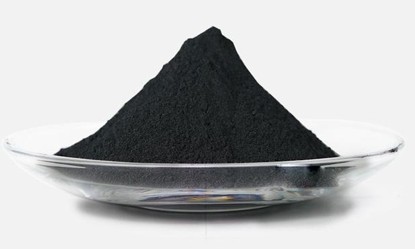
Molybdenum disulfide (MoS₂ ) is one of the most commonly used solid lubricant fillers for modified polytetrafluoroethylene (PTFE). Its core function is to significantly improve the wear resistance and creep resistance of PTFE while maintaining its low coefficient of friction, thereby expanding the application of PTFE in engineering fields such as bearings and seals.
一、Core role and mechanism
The modifying effect of molybdenum disulfide on PTFE is mainly reflected in the following aspects:
a) Significantly improved wear resistance: This is the core contribution of molybdenum disulfide. Studies have found that adding 10% by weight of MoS₂ can reduce the wear rate of PTFE by up to 72.4%.
b) Improved frictional stability: Molybdenum disulfide can improve the stability of the friction coefficient of PTFE and effectively reduce the friction coefficient at high temperatures.
c) Enhanced creep resistance: PTFE is prone to creep deformation under long-term loads. The filling of molybdenum disulfide can effectively restrict the movement of molecular chains and improve its dimensional stability.
d) Improved thermal conductivity: As an inorganic filler, molybdenum disulfide can improve the thermal conductivity of PTFE, which helps to dissipate friction heat and prevent local overheating of the material.
e) Synergistic enhancement effect: Molybdenum disulfide is often used in conjunction with carbon fiber, glass fiber, graphite and other materials to simultaneously improve the mechanical strength, wear resistance and lubricity of the materials.
The mechanisms of these effects mainly include:
a) Formation of a lubricating transfer film: During the friction process, MoS₂ easily forms a low-shear-strength transfer film on the mating surface, transforming friction into sliding between lubricant layers, thereby reducing friction and wear.
b) Restricting molecular chain movement: MoS₂ particles can adsorb onto PTFE molecular chains, restricting their movement and thus improving the material's creep resistance and mechanical strength.
c) Leveraging its layered lubrication properties: MoS₂ has a typical layered structure with weak interlayer bonding and easy slippage, which is the fundamental reason for its excellent solid lubrication performance.
二、Overall impact on PTFE performance
Adding MoS₂ is a performance trade-off, with the following specific impacts:
a) Coefficient of friction: Generally increases. Although MoS₂ itself is a lubricant, its solid particles increase surface roughness, resulting in a slight increase in the coefficient of friction.
b) Hardness and density: Increased. The addition of inorganic fillers increases the overall hardness and density of the composite material.
c) Tensile strength: Decreased. MoS₂ has limited compatibility with the PTFE matrix, and particles may become stress concentration points, leading to a decrease in tensile strength.
d) Crystallinity: Decreased. The addition of MoS₂ disrupts the regular arrangement of PTFE molecular chains, reducing its crystallinity.
三、Key parameter requirements
To ensure the modification effect, the following key parameters of molybdenum disulfide need to be monitored:
1. Purity: High purity is fundamental to ensuring performance. Impurities (such as unreacted molybdenum, sulfur, or other metal oxides) can weaken lubrication and even exacerbate wear.
2. Particle size and distribution: Particle size directly affects dispersibility and modification effect. Finer particles (such as those in the micrometer or nanometer range) have a large specific surface area and strong interaction with the matrix, but are prone to aggregation. A commonly used reference particle size range is 3–20 μm.
3. Dosage (mass fraction): There is an optimal dosage, generally between 5% and 20%. Too little dosage will have little effect, while too much will cause the composite material to become brittle and its mechanical properties to decrease. Many studies have shown that around 10% is a good balance point for overall performance.
4. Morphology and Structure: The microstructure (e.g., plate-like, petal-like) and crystal structure of molybdenum disulfide affect its lubrication properties. For example, studies have shown that MoS₂/C composite fillers with specific morphologies exhibit superior modification effects.
5. Surface treatment: To improve compatibility with PTFE, MoS₂ can be surface modified (e.g., treated with coupling agents) to enhance interfacial bonding and reduce performance degradation caused by agglomeration.
6. Preparation process compatibility: MoS₂ needs to withstand the sintering temperature of PTFE (approximately 360-380℃). It is stable within this temperature range, but care should be taken to avoid processing at excessively high temperatures or in oxidizing atmospheres to prevent oxidation failure.
Shanghai Canal offers molybdenum disulfide from Climax, USA, which has low impurity content, low oil content, and low acid value, thus improving wear resistance. https://www.canalchem.com/products/prd-category-002/index.html